The Cost of the Wrong Brief
Most MedTech search failures don't start at the search. They start at the briefing conversation.

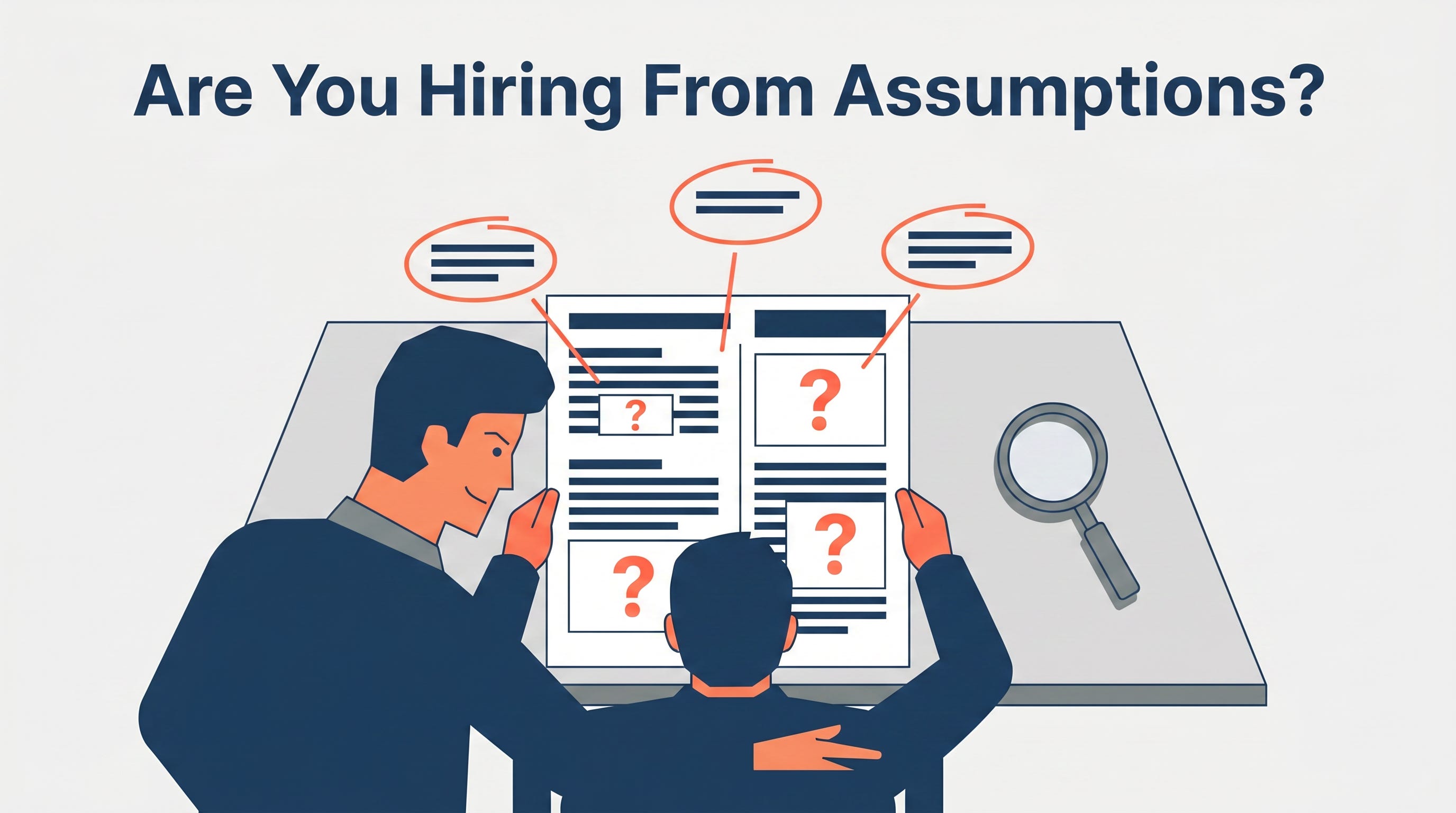
By the time a hiring leader engages a recruiter, they’ve usually already made several assumptions about the role. Who it’s for. What it pays. How many suitable candidates exist. What the market thinks of their organisation.
Most of those assumptions are untested.
The wrong brief is the most expensive mistake in MedTech hiring. It’s also the most preventable.
And in ANZ MedTech — a market defined by specialist expertise, small professional communities and long relationship memories — untested assumptions at the briefing stage don’t just slow a search down. They make failure the most likely outcome before anyone has picked up the phone.
What a wrong brief actually looks like
It rarely looks like an obvious mistake. It looks like a reasonable set of assumptions made by a capable leader who simply hasn’t had visibility of the current market before committing to a position.
The compensation brief that’s 18 months behind the market
A base salary set at what the last person in the role earned.
A car allowance that hasn’t moved since 2022.
A commission structure that made sense when the territory was established but no longer reflects what candidates at that level expect.
The search launches. The right candidates are identified and approached.
The conversations start well — until compensation is discussed. At that point, the strongest candidates disengage quietly. Not dramatically. They just stop responding.
The hiring leader assumes the market is being difficult. In reality, the brief was never calibrated against what the market is actually paying.
The talent pool brief built on assumption
“There are plenty of ortho reps in Sydney.” Maybe.
But how many have the specific subspecialty experience the role requires?
How many are within the relevant tenure window — experienced enough to contribute immediately, not so entrenched that a move requires a significant package premium?
How many have existing relationships with the key accounts that matter?
Without mapping the total addressable talent pool before the search begins, a hiring leader is committing resources to a search whose viability is unknown.
They may be searching a pool of twelve genuinely qualified candidates — or two.
The EVP brief built on internal perception
What does your organisation look like to the people you most want to hire? Not what your leadership team thinks it looks like.
What do your direct competitors’ top performers actually think — about your products, your leadership, your culture, your trajectory?
In a small market where senior professionals talk to each other, perception travels fast.
A hiring leader who launches a search without understanding how their organisation is positioned in the candidate market may be working against a perception problem they don’t know exists.
The three questions a brief should answer before search begins
1. Is our compensation architecture competitive for this role in this market right now?
Not last year. Not what the last hire accepted. What the relevant talent pool — at the specific seniority, tenure and specialty level required — expects today. That means real data from real candidates in the relevant segment, not benchmarks pulled from salary surveys that aggregate across industries.
2. How large is the pool of genuinely qualified candidates — and where do they sit?
Total addressable talent.
Competitor team structures.
Movement patterns. Tenure profiles.
Adjacent capability — candidates who don’t hold the exact title but bring transferable expertise that could work. This is market mapping before mandate, not post-hoc justification for why a search is taking longer than expected.
3. What does our organisation look like from the outside — and what friction will we face?
Candidate sentiment.
Why top performers in this segment join organisations like yours — or don’t.
What objections arise in search conversations.
Whether your EVP is landing or whether there are perception gaps that need to be addressed before you go to market.
Getting this wrong doesn’t just slow the search — it damages employer brand in a community where word travels.
What happens when these questions go unanswered
The search takes longer than budgeted.
Candidates disengage at offer stage.
The shortlist is thinner than expected.
The hire is made under time pressure rather than on merit. Or the search fails entirely and starts again — with the same untested brief.
In a MedTech territory role, six months of vacancy is a direct commercial loss.
In a leadership role, the cost compounds: delayed decisions, team uncertainty, competitive exposure.
The ROI of getting the brief right before you start is not a nice-to-have. It’s the difference between a search that works and one that doesn’t.
Intelligence before action
DukeMed’s pre-search reports exist for exactly this gap — structured market intelligence commissioned before a mandate launches, so the brief is built on evidence rather than assumption.
Talent Index — maps the total addressable talent pool in your MedTech category. Identifies competitor team structures, movement patterns, and real headcount dynamics.

Answers the question: who actually exists in this market, and where are they?
Talent Compensation — calibrates your compensation architecture against real market benchmarks. Validates salary, incentive design and offer competitiveness before you enter negotiation.
Answers the question: what will it actually take to hire at this level right now?
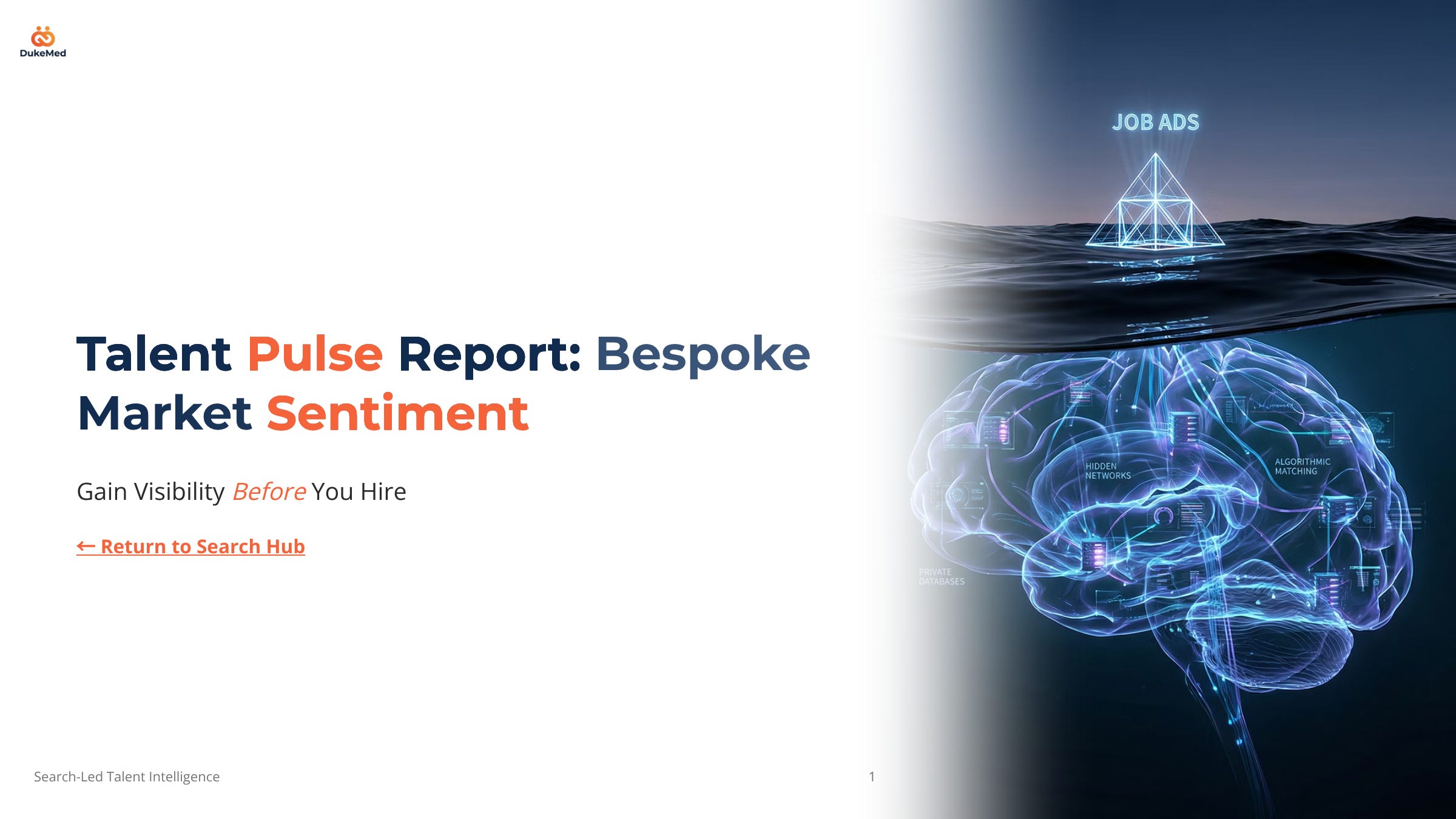
Talent Pulse — surfaces candidate sentiment and qualitative friction points before your mandate launches. Understands why top talent joins — or rejects — your organisation versus direct competitors.
Answers the question: what does our employer brand look like to the people we most want to hire?
Each report is a standalone commissioned engagement.
They can be used independently or in combination depending on where your visibility gaps are greatest.
The Pre-Hire Insight diagnostic is a short, self-serve scorecard that identifies where your visibility gaps are greatest — in talent accessibility, offer calibration, or market perception — and points you toward the right intelligence framework before you begin.
The search is rarely where MedTech hiring goes wrong. The brief is.
Get that right before you start, and the search has a fighting chance.